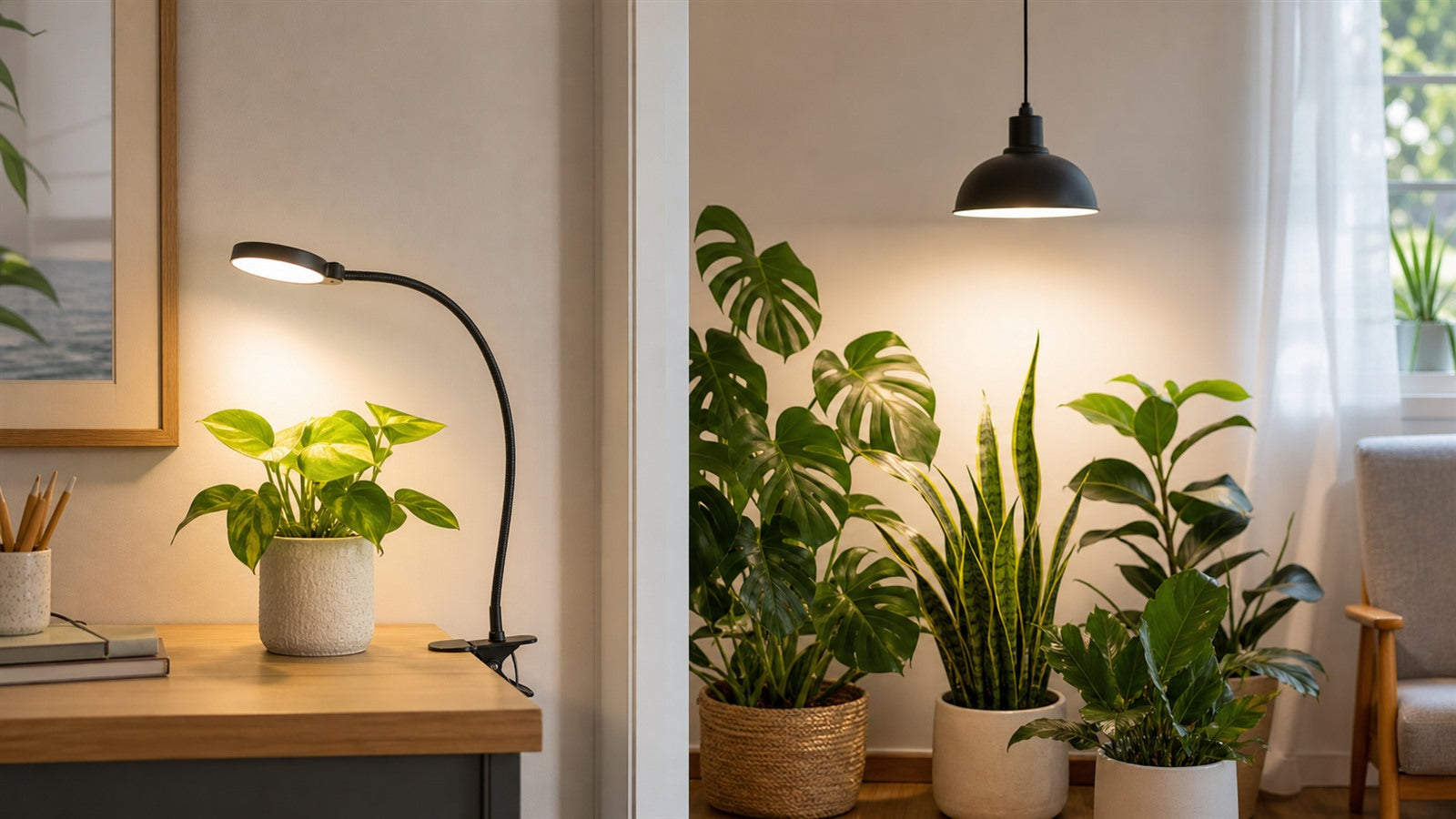

How Far Should a Grow Light Be From Small Indoor Plants?
Quick Answer
A grow light should be close enough that the leaves receive focused light, but far enough that the fixture does not crowd the plant, miss part of the canopy, or make the room harder to use. For small indoor plants, start with the plant spot, watch how the leaves respond, and adjust angle or distance one step at a time.
There is no single distance that works for every plant, fixture, and room. A compact desk plant, a shelf of herbs, and a visible plant corner all need different coverage. Use this guide to decide what to adjust before you change products.
Why Distance Is Not Just an Inch Number
Grow light distance depends on three practical questions:
- Does the beam reach the leaves?
- Does the light cover the plant group evenly?
- Can the setup stay in place without blocking normal use of the room?
If a light is technically close but points at the wall, the plant still misses useful coverage. If a light is far enough to look tidy but only reaches one side of the plant, the setup may need a small angle change. If the fixture blocks your desk or shelf, the routine will probably break down even if the plant needs more light.
Start with Setup Guide if you are comparing placement options, or use Find My Setup if you are choosing between clip-on and pendant forms.
Start With the Plant Type and Spot
For one small desk plant, a compact clip-on grow light can work well when the light is aimed at the top leaves and the fixture does not crowd the pot. For herbs and succulents, the routine should be easy to repeat because these plants often sit in kitchens, windowsills, or small shelves where the setup gets moved.
For grouped shelf plants, coverage matters more. If one beam only reaches the front pot, the back plants may still stretch toward the strongest light. If the plant group is wide or part of a visible room corner, a pendant-style setup may create cleaner coverage.
Watch for Four Adjustment Signals
1. The plant keeps leaning
If the plant keeps leaning strongly toward the light, the beam may be too far to one side or not covering the canopy evenly. Rotate the pot occasionally, but also check whether the fixture can be angled more directly toward the leaves.
2. Lower leaves stay shaded
If the top leaves receive light but the lower leaves stay in shadow, a small angle change may help more than moving the entire light closer. Try one adjustment, then observe for several days before changing the setup again.
3. The fixture crowds the plant or desk
A light can be close enough for the plant and still wrong for the room. If the head of the light blocks normal desk use, watering, or shelf access, the distance may be impractical. A setup that stays in place usually works better than one you keep moving.
4. The timer routine keeps changing
If you keep changing the timer because the light is inconvenient, the setup may need a form change. A stable timer routine is easier to evaluate than daily adjustments.
What to Adjust First
Before switching products, adjust in this order:
- Aim the beam at the leaves instead of the wall.
- Move the fixture slightly higher or lower.
- Check whether the beam covers the whole plant group.
- Keep one timer routine long enough to observe the plant.
- Change product form only if coverage or room fit still does not work.
For compact desk plants, the Soliseed 6W LED Clip-On Grow Light is the cleanest starting path. For grouped pots or larger leaves, compare the Soliseed 10W Clip-On Grow Light. For wide plant corners, compare Soliseed hanging grow lights.
Simple Distance Guidance by Setup
Small desk plants
Keep the light close enough to reach the top leaves without blocking the desk. If the plant leans or the beam misses the canopy, adjust angle first.
Herbs and succulents
Prioritize a repeatable routine. These plants often sit on shelves or counters where the light can get moved. A consistent position is easier to judge than a perfect-looking setup that changes every day.
Grouped shelf plants
Look for even coverage across the group. If only one plant receives the strongest light, a brighter clip-on or a different angle may help. If the shelf is wide, a pendant form may be cleaner.
Visible plant corners
If the light is part of the room, distance and appearance matter together. A pendant can sometimes provide cleaner coverage and a better look than forcing a clip-on fixture into a wide corner.
Related Guides
- Setup Guide
- Find My Setup
- Grow Lights for Dark Corners
- Clip-On Grow Light Setup Checklist for Small Indoor Plants
- How Long Should a Grow Light Stay On in a Low-Light Apartment?
- Best Houseplants for Low-Light Rooms: When to Add a Grow Light
- Clip-On vs Pendant Grow Lights: Which Setup Fits Your Space?
FAQ
Can a grow light be too close to a small indoor plant?
Yes. If the fixture crowds the plant, covers only one side, or makes the setup hard to keep in place, the distance may be too close or the angle may be wrong.
Should I move the light closer or change the timer first?
Adjust angle and distance before changing the timer every day. A stable timer routine makes it easier to understand whether the setup is working.
Is a 6W clip-on grow light enough for small plants?
It can be a good fit for one compact desk plant, herb pot, succulent, or small shelf spot when the beam reaches the leaves. For grouped pots or larger leaves, compare a brighter clip-on or pendant path.
What if one side of the plant gets all the light?
Try a small angle change and rotate the pot occasionally. If the plant group is too wide for one beam, use a wider setup instead of forcing the same light closer.
When should I choose a pendant grow light instead?
Choose a pendant-style setup when the plant group is wide, visible in the room, or has no stable clamp point. It can provide cleaner coverage and a better room fit.