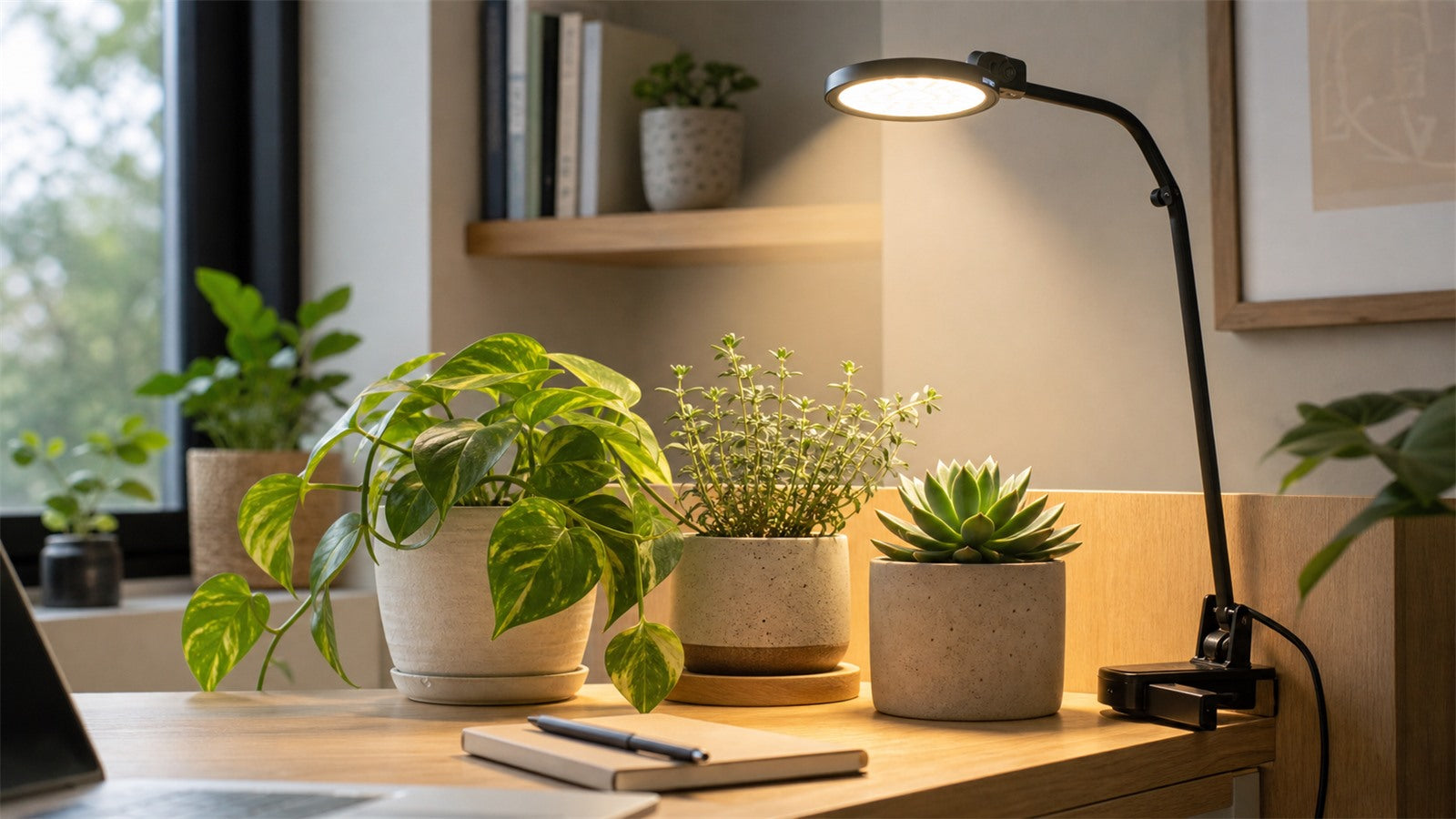
How to Set Up Grow Lights on a Plant Shelf Without Making the Room Feel Harsh
Quick Answer
A plant-shelf grow light should give the leaves a focused, repeatable light zone without washing the entire room in glare. Start with the shelf width, plant height, and the darkest part of the day. Then place the light above the canopy, aim it at the leaves, and make one small adjustment at a time.
The goal is not to make the room look brighter. The goal is to give the plants a consistent light routine that still feels comfortable in a normal living space.
Start With the Shelf, Not the Fixture
Before choosing a clip-on or hanging light, look at the shelf itself.
- How wide is the plant group?
- Are the tallest leaves all on one side?
- Is there a stable clamp point?
- Can a hanging light sit above the shelf without blocking normal use?
- Does the shelf need to look calm in a living room, bedroom, or home office?
A narrow shelf with one or two compact plants may work well with a focused clip-on light. A wider shelf or a group of plants at different heights may need broader coverage from above. Use Find My Setup when the shelf shape matters more than the plant name.
Use Focused Coverage Instead of More Room Brightness
Grow lights are easier to live with when most of the light stays on the plants. If the beam lands on the wall, the ceiling, or the front edge of the shelf, the room can feel brighter without giving the leaves better coverage.
Check the setup from the side. You should be able to see that the light reaches the top leaves and at least part of the lower canopy. If only one pot is inside the strongest part of the beam, move the plant group, adjust the angle, or choose a wider setup.
This is why “brighter” is not always the first answer. Better direction can be more useful than turning the light up.
Keep Warm-White Light Visually Quiet
For a visible shelf, warm-white light usually fits a home more naturally than a purple or highly colored glow. The fixture should feel like part of the room, not a grow-tent experiment.
You can also reduce visual harshness by:
- Keeping the light head above eye level when possible.
- Aiming the beam down and across the leaves.
- Leaving a little space between the light and the wall.
- Using one stable daily routine instead of turning the light on and off throughout the day.
- Avoiding multiple overlapping beams unless the shelf truly needs them.
The plants need useful coverage. The rest of the room does not need to glow.
Choose Clip-On or Hanging by Coverage Shape
A clip-on light works best when:
- the shelf has a stable clamp point,
- one or two compact plants share a small zone,
- the light can point directly at the leaves,
- and the cord can stay clear of watering and normal shelf use.
For a compact setup, compare a clip-on grow light for small indoor plants.
A hanging light works best when:
- the shelf is wider,
- several pots need the same overhead zone,
- a clip-on head would sit in the way,
- or the light needs to look balanced in a visible room.
For a wider plant group, compare hanging grow lights for plant shelves.
Neither form is automatically better. Match the light to the shelf width and the way the room is used.
A Simple Five-Minute Setup Check
Use this quick check before changing products:
1. Turn off the grow light
Look at the shelf during the weakest natural-light period. This shows what the space actually receives without help.
2. Turn the light on at a moderate setting
Check whether the beam lands on the leaves instead of the wall or shelf edge.
3. Look from both sides
If one side of the plant group stays dark, adjust the angle or spacing. Do not judge coverage from the front only.
4. Check normal room use
Make sure the fixture does not block books, watering, desk work, or the path around the shelf. A practical setup is easier to keep consistent.
5. Change one thing and wait
Adjust angle, height, plant spacing, brightness, or timing—but not all five at once. Give the plants several days before deciding what to change next.
Common Plant-Shelf Lighting Mistakes
Lighting the wall instead of the leaves
This creates visible glow without useful plant coverage. Correct the beam direction first.
Using one narrow beam for a wide group
One small light may be a good fit for one compact plant zone but not for several pots spread across a shelf. Check coverage before raising brightness.
Placing the light where it is easy to bump
If the light head or clamp sits in the path of normal shelf use, the routine will probably change. Stable placement matters.
Making daily changes
Moving the light every day makes it hard to understand the plant's response. Keep a simple seven-day note and change one variable at a time.
What to Watch During the First Week
You do not need a complicated measurement system. Watch for practical signals:
- Does the plant keep leaning strongly toward one side?
- Are new leaves opening toward the light?
- Does one pot stay outside the main coverage area?
- Is the routine easy enough to repeat?
- Does the room still feel comfortable when the light is on?
If the plants and the room both feel more stable, the setup is moving in the right direction.
Final Takeaway
The best plant-shelf grow light setup does two jobs at once: it gives the leaves focused, consistent coverage, and it fits the way the room is actually used.
Start with the shelf width. Aim the light at the leaves. Keep the room visually quiet. Then make one change at a time.
For more help, use the Setup Guide, compare options with Find My Setup, or review how far a grow light should be from small indoor plants.