
How Long Should a Grow Light Stay On in a Low-Light Apartment?
Quick Answer
In a low-light apartment, start with one simple grow-light routine and keep it consistent before changing anything else. A repeatable daily schedule usually helps more than constant brightness changes or moving the lamp every day.
If the room is dim and the plant does not receive strong natural light, the main job of the grow light is not to feel intense. It is to give the plant a dependable routine. In most apartments, timing consistency matters before fine-tuning.
If you are not sure whether the real issue is timing, placement, or the wrong setup form, start with Find My Setup. It is the fastest way to connect the plant spot to the right next step.
Why Low-Light Apartments Need Routine More Than Guesswork
The problem in a low-light apartment is often inconsistency. A plant gets a little window light, a little lamp light, then a different routine the next day. That creates confusion for both the plant and the person caring for it.
Soliseed's rule is simple: use one repeatable timer routine first, then adjust after you see the plant response. This reduces the urge to keep changing brightness, angle, and hours all at once.
Start With the Plant Spot
Before you think about settings, look at the spot:
- Is the plant in a dark corner with weak natural light?
- Is it on a small shelf or side table away from a bright window?
- Is the light aimed at the leaves or only lighting the wall and pot?
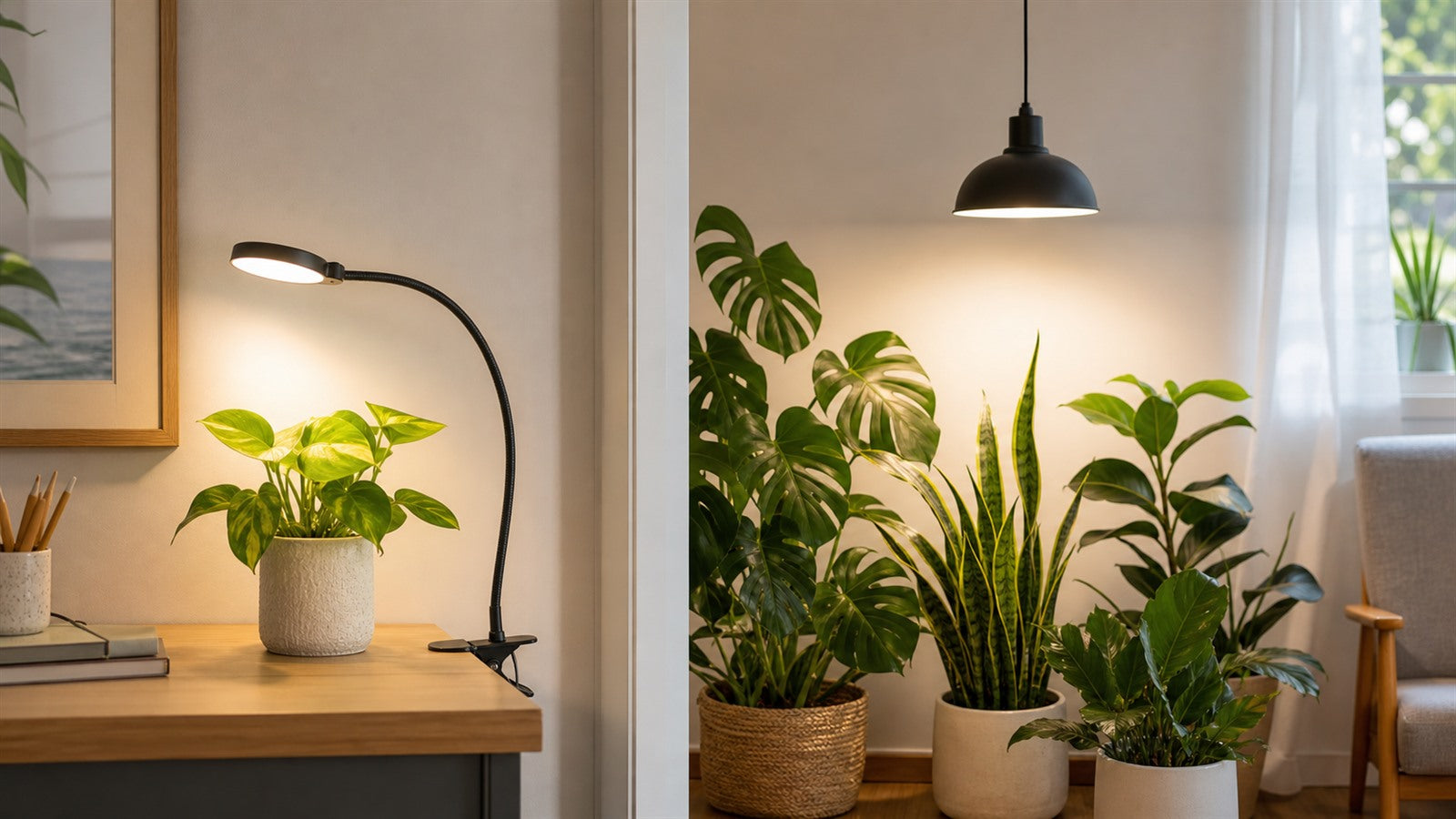
If the plant spot is small and focused, a clip-on setup is usually the easiest place to start. If you still need help matching the scene to the setup, review Grow Lights for Dark Corners and Setup Guide.
Use the Timer Before You Change Brightness
Many beginners adjust brightness too early. A better order is:
- place the light so it reaches the leaves evenly
- choose one repeatable timer routine
- keep the routine stable long enough to observe the plant
- adjust only after you see whether the plant still stretches, leans, or stalls
This makes the setup easier to evaluate. If the plant still looks weak after a stable routine, then change the distance, angle, or brightness level.
Common Low-Light Apartment Mistakes
Mistake 1: Changing the Routine Every Day
If the light schedule changes constantly, the plant never gets a stable pattern. Keep the routine steady before deciding it is not working.
Mistake 2: Lighting the Room Instead of the Leaves
The glow in the room can look fine while the leaves still receive uneven coverage. Always check the leaf area first.
Mistake 3: Comparing Specs Before Solving the Scene
In many apartments, the first problem is not wattage. It is whether the setup matches the spot. A small shelf, desk, or dark corner often needs a practical clip-on path before it needs more complexity.
Decision Checklist
Use this quick checklist:
- The plant is in a dim apartment spot and needs a dependable routine
- The light can be aimed directly at the leaves
- The setup should stay compact and home-friendly
- You want a timer-led habit, not a manual daily guess
If all four are true, the next step is usually a clip-on routine rather than a bigger or more technical setup. Review the Soliseed 6W LED Clip-On Grow Light after you identify the spot.
Related Guides
- Find My Setup
- Grow Lights for Dark Corners
- Setup Guide
- Clip-On vs Pendant Grow Lights: Which Setup Fits Your Space?
- Grow Light Placement for Cozy Indoor Corners
- How to Choose a Grow Light for Indoor Plants
FAQ
Should I change the brightness before I change the timer routine?
Usually no. Start with a stable timer routine and even leaf coverage first. Change brightness after you have a stable baseline.
What if my apartment has one bright window but the plant is still in a dark corner?
Treat the plant spot, not the apartment average, as the real lighting condition. If the plant is in the darker corner, solve for that corner.
Is a clip-on grow light enough for a low-light apartment?
For many small plant spots, yes. A clip-on setup can work well when the area is compact and the light can be aimed directly at the leaves.
What is the best next step if I still feel unsure?
Use Find My Setup first. It helps translate the question from "what specs do I need?" to "what setup fits this plant spot?"