
Best Houseplants for Low-Light Rooms: When to Add a Grow Light
Quick Answer
The best houseplants for low-light rooms are usually tolerant plants such as ZZ plants, snake plants, pothos, Chinese evergreens, cast iron plants, and some philodendrons. They can handle dimmer rooms better than many tropical plants, but "low light" does not mean "no usable light."
If new leaves are getting smaller, stems are stretching, or the plant keeps leaning hard toward the window, the room may need a steadier lighting routine. A small, warm or neutral white grow light can help when it is aimed at the leaves and kept on a consistent timer.
If you are not sure whether your room needs a light, start with Find My Setup. It helps translate the plant spot into a practical setup path before you compare products.
What "Low Light" Really Means Indoors
Low light usually means the plant receives indirect, limited, or inconsistent daylight. It does not mean the plant can grow well in a closed room, a dark hallway, or a corner where the leaves never receive usable light.
People often judge a room by how bright it feels to their eyes. Plants respond to the light that reaches their leaves. A bedroom corner, office shelf, or side table can look comfortable while still being too dim for steady growth.
That is why the first question is not "Which plant can survive here forever?" The better question is "Is this spot giving the plant enough repeatable light to stay healthy?"
Best Low-Light Houseplants for Beginners
These plant types are common choices for dimmer rooms because they tolerate lower light better than many high-light plants:
- ZZ plant
- snake plant
- pothos
- Chinese evergreen
- cast iron plant
- heartleaf philodendron
- peace lily
- some dracaena varieties
Tolerant does not mean maintenance-free. These plants still need a stable watering routine, drainage, and enough light to support new growth. In a very dim room, growth may slow, leaves may stretch, or color may fade.
Three Signs Your Low-Light Plant Spot Needs Support
1. New Growth Is Smaller or Stretched
If new leaves are smaller than older leaves, or the stem is stretching with larger gaps between leaves, the plant may be reaching for more usable light.
This is common on shelves, desks, and corners that receive only a small amount of window light during the day.
2. The Plant Leans Hard Toward the Window
A gentle lean is normal. A strong lean is a signal. It means the plant is trying to move its leaves toward the strongest available light source.
Before moving the plant again, check whether the spot can be supported with a more stable leaf-focused light routine.
3. The Room Looks Bright, But the Leaves Stay Shaded
A room can feel bright because the wall, floor, or desk is illuminated. That does not always mean the leaves receive useful coverage.
Look at the plant itself. If only one side gets light, or taller leaves block smaller ones, the setup may need adjustment.
When a Grow Light Helps
A grow light can help when the room has limited natural light, the plant spot is away from a window, or the plant needs a more consistent routine than daylight alone can provide.
For most homes, the goal is not to create a greenhouse effect. The goal is to make the plant spot more dependable. A home-friendly grow light should:
- aim at the leaves, not just the wall or pot
- fit the room visually
- run on a repeatable timer
- use a comfortable white or warm-white look
- support the plant without making the space feel technical
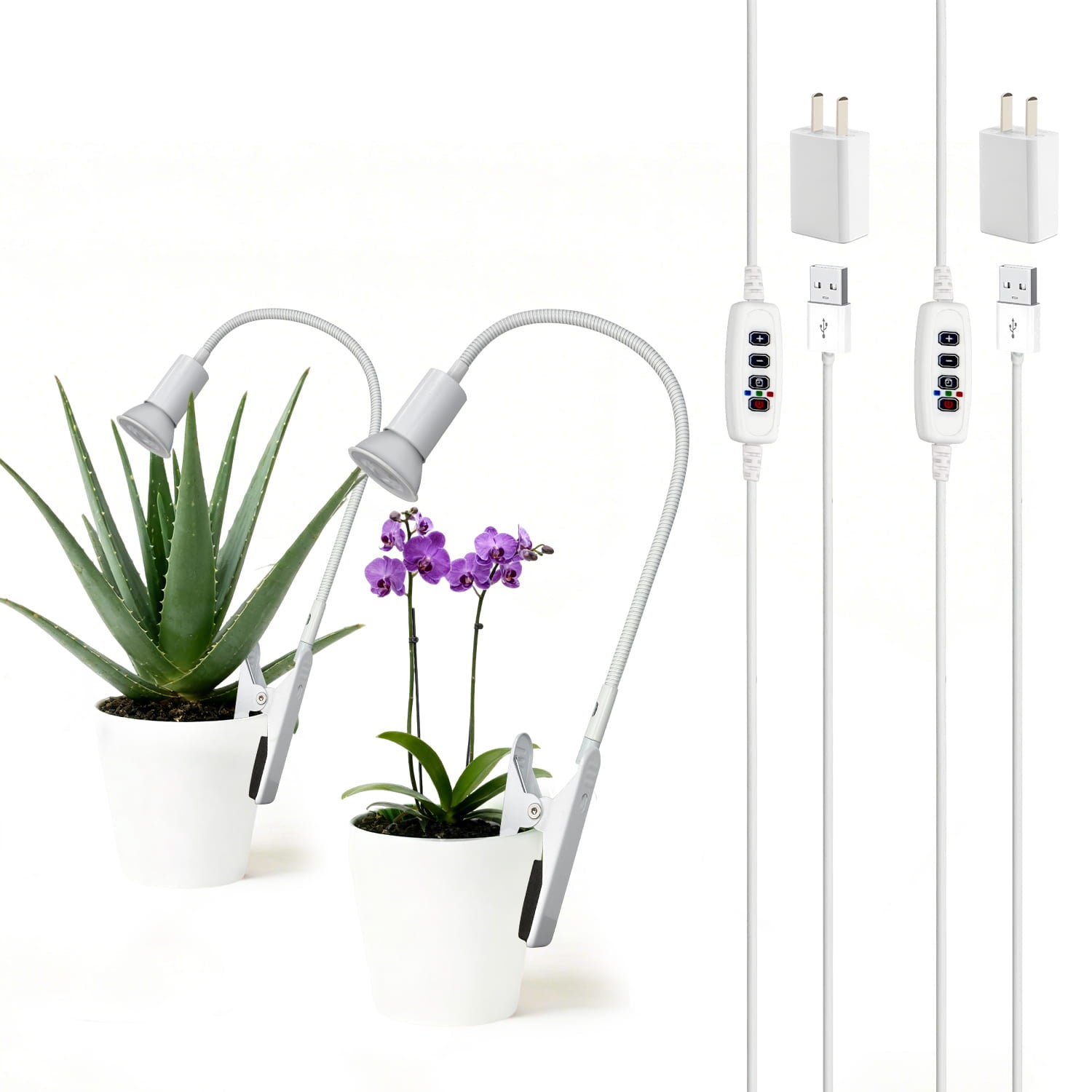
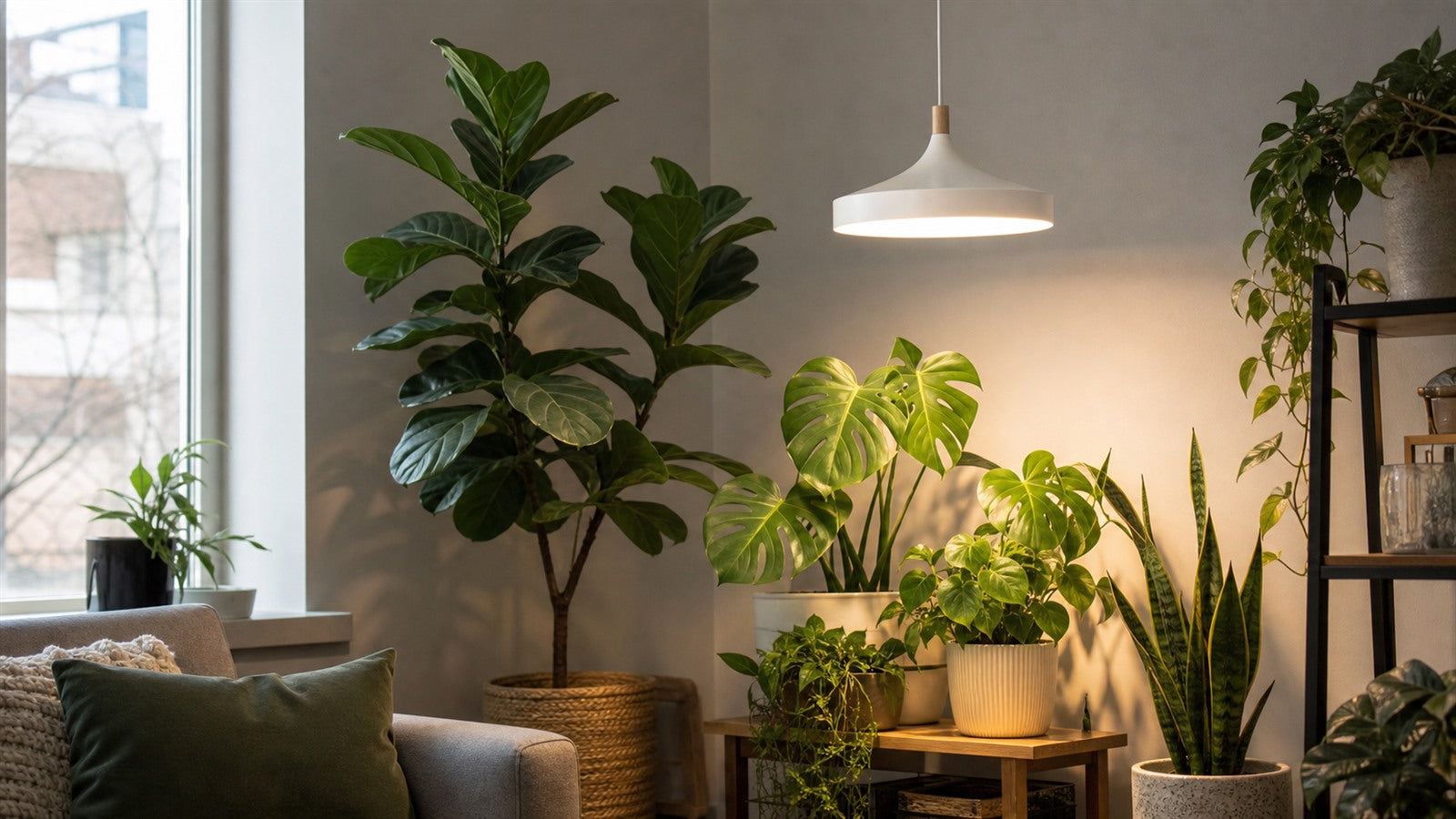
If the plant sits on a desk, shelf, or small side table, a clip-on light is often the easiest setup. If the plants are grouped in a visible corner, a pendant setup may look cleaner.
Start With the Plant Spot
Before choosing a light, look at the scene:
- Is the plant on a desk, shelf, side table, or plant stand?
- Is there a secure clamp point nearby?
- Are the leaves receiving even coverage?
- Does the room need the light to stay visually calm?
- Is this one plant, or a group of plants?
For a compact plant spot, review the Soliseed 6W LED Clip-On Grow Light. For a grouped plant corner, compare the pendant path on the Soliseed Hanging Grow Light.
You can also use Grow Lights for Dark Corners and the Setup Guide if you need help with placement, distance, or timer routine.
A Simple Low-Light Room Checklist
Use this checklist before changing plants or buying a bigger light:
- The plant is tolerant of lower light.
- The pot has drainage and the soil is not staying wet for too long.
- The leaves receive some repeatable light during the day.
- The plant is not stretching, leaning strongly, or losing color.
- The setup is easy enough to keep consistent.
If the last three points are weak, a small grow light routine may help more than moving the plant again.
How to Add a Grow Light Without Making the Room Feel Harsh
Keep the setup simple:
- Choose a white or warm-white look instead of purple light for living spaces.
- Aim the light at the leaves, not the whole room.
- Start with one consistent timer routine.
- Keep the fixture close enough to be useful but placed so it fits the room.
- Watch the plant response before changing brightness or distance.
The best setup is usually the one you can repeat. A stable routine is easier to evaluate than a light that changes every day.
Related Guides
- Find My Setup
- Grow Lights for Dark Corners
- Setup Guide
- How Long Should a Grow Light Stay On in a Low-Light Apartment?
- Clip-On vs Pendant Grow Lights: Which Setup Fits Your Space?
- Grow Light Placement for Cozy Indoor Corners
FAQ
Can low-light plants live with only artificial light?
Some low-light-tolerant plants can do well with artificial light when the light is consistent and aimed at the leaves. The setup still needs a practical timer routine and enough coverage for the plant size.
How many hours should a grow light stay on?
Start with a consistent routine rather than changing the schedule every day. The right number of hours depends on the plant, natural daylight, and fixture strength. If you are in a dim apartment or dark corner, use one stable routine first, then adjust based on plant response.
Should a grow light be above the plant?
Above the plant often gives cleaner coverage for grouped plants, but a side or clip-on setup can work for small shelves, desks, and single plants if the light reaches the leaves evenly.
Is purple grow light necessary for houseplants?
No. Many home plant setups use white or warm-white grow lights because they are easier to live with in bedrooms, living rooms, and offices. The key is useful leaf coverage and a consistent routine.
What is the best next step if I am unsure?
Start with the plant spot. Use Find My Setup, then compare whether a clip-on or pendant light fits the room better.