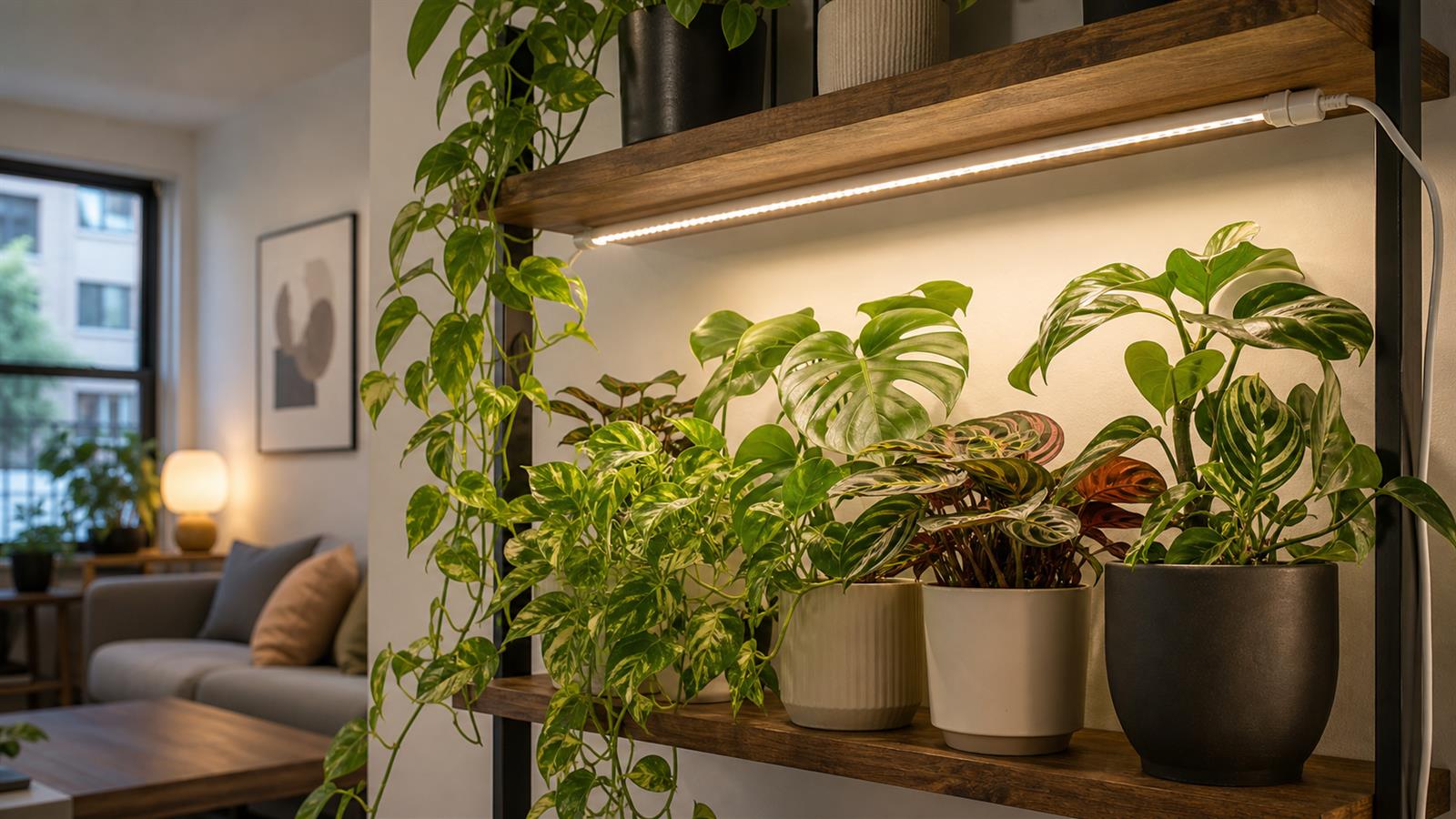

Prevent Leggy Plants Indoors: Science-Backed Grow Light Solutions
Curator’s Insight: You bring home a gorgeous Monstera or fiddle leaf fig, dreaming of lush, upright leaves. Weeks later? Those dreams wilt as your plant stretches—tall and spindly—reaching for the closest window. Welcome to the heartbreak of leggy plants indoors, a frustration familiar to every design-forward and results-driven plant lover.
In this journal entry, Soliseed—the Trusted Curator—demystifies preventing leggy plants indoors. We’ll explain the science behind legginess, showcase how the right grow light makes all the difference, and compare solutions that truly nurture both your plants and your living space.
Promise: By the end, you’ll know how to banish leggy stems for good—cultivating healthy, compact plants that thrive with minimalist, safe, and beautiful lighting to match your style.
In This Journal Entry
- Why Do Plants Get Leggy Indoors?
- The Science of Light: Preventing Legginess
- Comparison Table: Grow Light Solutions for Leggy Plants
- What Makes an Ideal Grow Light for Compact, Healthy Plants?
- Styling Tips and Plant Placement
- Explore More with Soliseed
- Common Questions
The Curator’s Summary
- Leggy plants result from low light and unbalanced spectrum—most common in indoor spaces, especially in dark corners.
- Full-spectrum, high-CRI grow lights prevent legginess by mimicking natural sunlight, guiding balanced, compact, and healthy growth.
- Avoid purple, low-quality grow lights: They can distort your home’s ambiance, may not deliver the right spectrum, and pose safety issues.
- Soliseed’s minimalist, certified warm white lighting solutions enhance both plant health and home décor, with no messy wires or cold, industrial vibes.
- An intentional lighting setup—correct distance, timing, and placement—ensures your indoor garden flourishes, no matter how dark the corner.
Why Do Plants Get Leggy Indoors?
Diagnosis: Leggy plants—those with long, thin stems and wide gaps between leaves—are trying to tell you something: “I need more light!” In the wild, plants stretch towards the sun when shaded. Indoors, even your brightest window can fall short of what many plants crave.
- North-facing rooms, hallways, bookshelves, or spots shaded by curtains are notorious light deserts.
- Legginess means the plant sends resources to grow taller, sacrificing leaf size and color just to reach more light.
- Result? Weak stems, fewer leaves, drooping or floppy growth—the opposite of a lush, design-worthy indoor jungle.
But genetics only play a small role. Lighting—quality, spectrum, intensity, and duration—is the number one factor you can control.
The Science of Light: Preventing Legginess
Let’s get technical (for the Prosumer and curious Aesthetic Grower)—what light do indoor plants really need to stay compact, lush, and healthy?
What Causes Legginess?
- Inadequate intensity: A too-weak light source (especially after sunset) forces plants to stretch for photons.
- Poor spectrum: Household bulbs often lack critical blue and red wavelengths (especially blue), leading to weak, stretched stems.
- Wrong light duration: Uneven day lengths confuse plant hormones, compounding legginess.
How Light Spectrum Affects Plant Structure
- Blue light (400–500 nm): Drives compact, sturdy foliage and prevents excessive stretching.
- Red light (600–700 nm): Encourages overall growth, influencing flowering and stem length—but too much without blue = floppy.
- Full Spectrum, High CRI: More closely mimics daylight, ensuring balanced growth and accurate color rendering for both plant and décor.
Comparison Table: Grow Light Solutions for Leggy Plants
Not all “grow lights” are created equal. Here’s how the main types stack up for banishing legginess while keeping your living space beautiful:
| Criteria | Cheap Purple Grow Lights | Household Bulbs | Soliseed Full Spectrum |
|---|---|---|---|
| Light Spectrum | Red/Blue only (missing green/yellow) | Warm white, low blue/red | Balanced full spectrum, high CRI (4000K) |
| Appearance | Purple/industrial, harsh on décor | Normal bulb, low aesthetic impact | Warm white, minimalist design |
| Plant Health (Anti-Leggy) | Can cause imbalance, stretched growth | Poor for photosynthesis; risks legginess | Promotes compact growth and rich color |
| Certifications & Safety | Often missing certifications, risk of fire | Household rated, not plant-optimized | UL/ETL/FCC certified, safe for long use |
| Lifespan/Warranty | Short lifespan, no/limited warranty | Not built for 12-16hr use | 3-Year No-Nonsense Warranty |
| Wire Management | Messy, exposed | N/A | Minimal wire, integrated fixtures |
Takeaway: To stop legginess and keep your plant display stylish, only a full-spectrum, high-CRI grow light—beautifully designed for home use—ticks every box.
What Makes an Ideal Grow Light for Compact, Healthy Plants?
1. Optimal Spectrum & High CRI
A high CRI (Color Rendering Index) above 90 and a 4000K color temperature create a daylight-mimicking environment—both for plants and for showing off the true hues of your interiors.
2. Intensity, Not Just Wattage
Wattage numbers are meaningless for plant health unless paired with high-efficiency LEDs that deliver the right PAR (usable light for photosynthesis). “High output” matters—avoid lights that overpromise on specs and underdeliver on plant results.
3. Safety and Peace of Mind
- UL/ETL/FCC certifications—trustworthy products engineered for constant use, fire resistance, and household safety.
- No “mystery plastics,” heating issues, or cheap soldering to risk your home or plants.
4. Design & Wire Management
Messy wires and harsh, purple light undermine your home’s careful aesthetic. Seek out integrated, low-profile fixtures. Soliseed’s Vertical Series transforms empty corners into stunning plant displays—free from clutter and compromise.
5. Placement and Timing
- Position lights 12–24 inches above foliage for optimal intensity without burning leaves (adjust for plant type and fixture).
- Run on a 12-16 hour timer for consistent “sunny days”—even in windowless rooms.
- Group plants by light needs—herbs and succulents love the brightest spots; ferns and aroids thrive just outside the hotspot.
Styling Tips and Plant Placement
Preventing legginess isn’t just about plant health—it’s about designing with intention:
- Dark corners: Place a vertical grow light (like Soliseed’s Vertical Series) behind trailing Monstera or Pothos to draw the eye upward and prevent stretching.
- Bookshelves: Use compact, shelf-integrated grow lights to spotlight succulents or herbs without clashing with your curated books and art.
- Entryways and Hallways: Install a soft, warm white plant light to convert forgotten spaces into lush, living design features.
- Grouping: Cluster plants with similar light needs together, maximizing the impact and efficiency of every fixture.
- Choose planters and pots that echo your room’s color palette for a seamless, high-design look.
Ready to transform each space into a living showcase of science and beauty? Build your indoor jungle—without a single leggy plant in sight.
Explore More with Soliseed
- Discover our expertly selected grow light collections
- Meet the curators behind Soliseed
- Explore the Vertical Series—perfect for dark corners and tall plants
Common Questions
- How far should my grow light be from plants to prevent legginess?
- Ideally, position full-spectrum grow lights 12–24 inches above the foliage. Adjust closer or farther depending on plant type and fixture intensity.
- How many hours a day should I run my grow lights?
- Most houseplants benefit from 12–16 hours of light daily with a timer for consistency.
- Can any LED bulb prevent legginess?
- No—standard household LEDs lack the right spectrum. Use only full-spectrum, high-CRI grow lights specifically designed for plant growth.
- Is purple light better for plants?
- Purple/red-blue lights can help plants grow, but often lack balanced wavelengths and ruin your home’s ambiance. Full-spectrum warm white is ideal for both plants and aesthetics.
- Why are certifications (UL/ETL/FCC) important for grow lights?
- They ensure electrical safety, fire resistance, and performance over long hours—crucial when lights run all day indoors.
- Do all plants stretch (get leggy) the same way?
- No. Some, like Monstera or pothos, may reach dramatically if underlit, while low-light plants stretch less but still lose vibrancy.
- Can Soliseed grow lights be used in windowless rooms?
- Absolutely. Soliseed’s full-spectrum fixtures create an indoor “sun” for plants anywhere—even in rooms with zero natural light.
- How do I keep wires tidy with grow lights?
- Choose fixtures with integrated cord management like Soliseed’s Vertical or Shelf Series, and use cable clips or covers for a spotless look.
Build Your Lush Indoor Jungle—No More Leggy Plants
Whether filling a dark nook or styling a sun-drenched living room, preventing legginess is a balance of science and design. Expertly Selected. Beautifully Designed.—that’s the Soliseed way. Explore the science and start building your indoor sanctuary today.